Spiral Plate Heat Exchanger
Suitable for high pressure and high temperature conditions
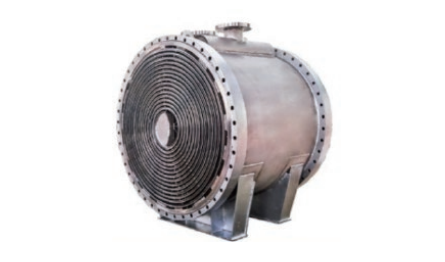
Spiral plate heat exchanger is a heat exchanger in which two spiral channels are made of two parallel metal plates, and heat exchange between cold and hot fluids through the spiral plate wall.
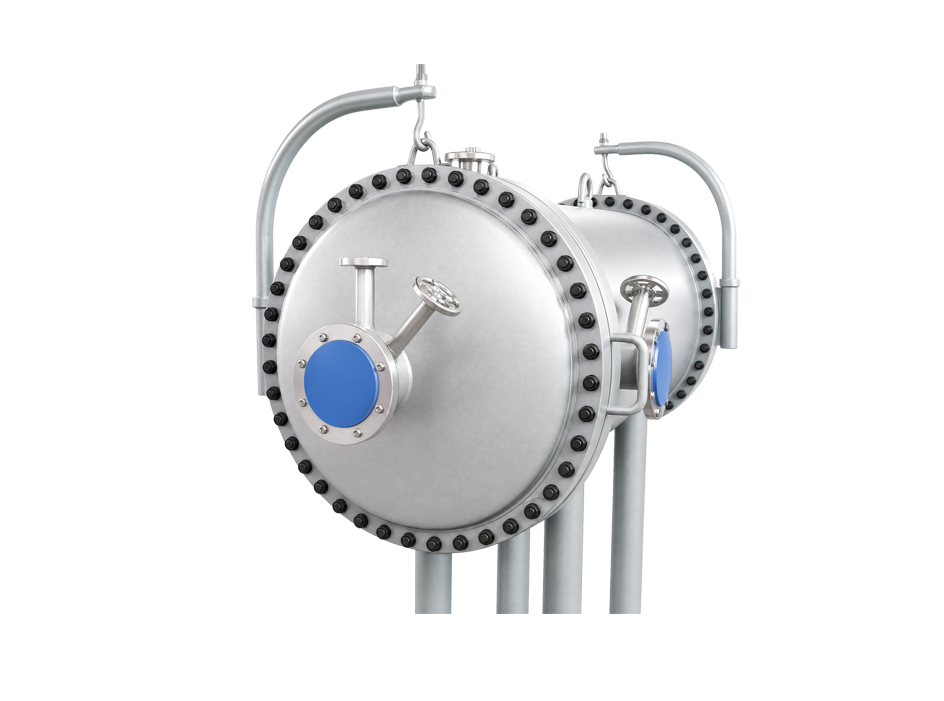
Applicable Characteristics
According to the structural form, there are two types of detachable and non-detachable. According to the material points, there are carbon steel and stainless steel materials.
Since the curvature of the spiral channel is uniform, the liquid flows in the device without a large turn, and the total resistance is small, the design flow rate can be improved to make it have a higher heat transfer capacity. In addition, the full counterflow spiral plate heat exchanger has the largest average temperature difference, which also helps to improve the heat transfer efficiency.
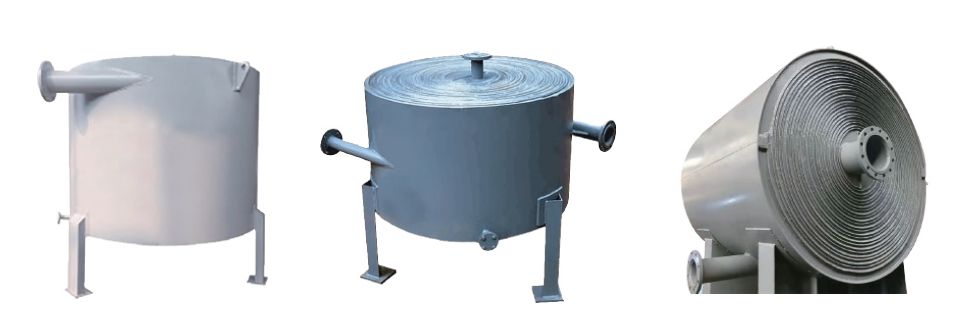
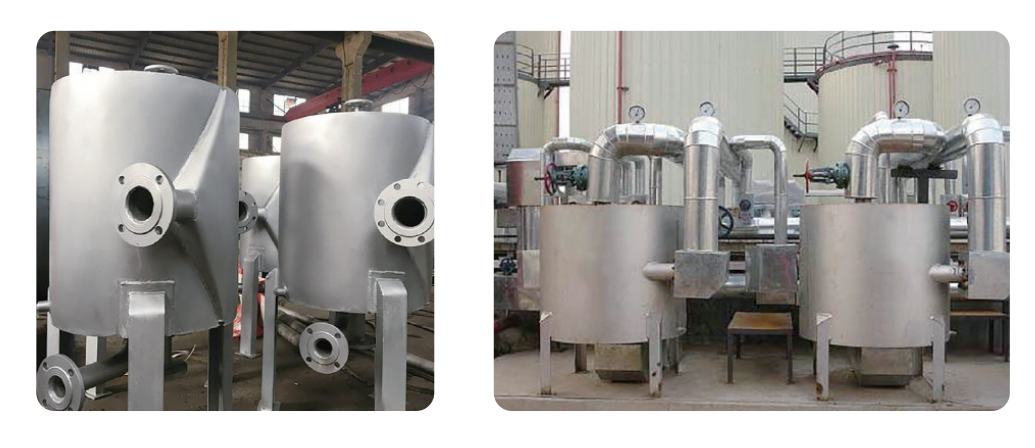
Spiral plate heat exchanger is the ideal heat exchange equipment, medium in the heat exchanger for the whole countercurrent flow, two kinds of medium can get the same flow characteristics for gas, liquid convective heat transfer, vapor condensation and liquid evaporation heat transfer. Spiral plate heat exchanger products are widely used, among which, the cone bottom spiral plate heat exchanger can solve the channel dirty plug.
Product Introduction
Spiral plate heat exchanger is the ideal heat exchange equipment, medium in the heat exchanger for the whole countercurrent flow, two kinds of medium can get the same flow characteristics for gas, liquid convective heat transfer, vapor condensation and liquid evaporation heat transfer. Spiral plate heat exchanger products are widely used, among which, the cone bottom spiral plate heat exchanger can solve the channel dirty plug.
01 Non-detachable-spiral Plate Heat Exchanger
The Non-detachable-spiral Plate Heat Exchanger has high sealing performance and is suitable for high pressure and temperature conditions. Such as food industry oil heat exchange, biological fermentation industry amino acid continuous elimination system preheating, heating, cooling, pharmaceutical industry intermediate cooling heat exchange, chemical plant organic cooling, condensation, environmental protection industry waste resources recovery heat exchange.
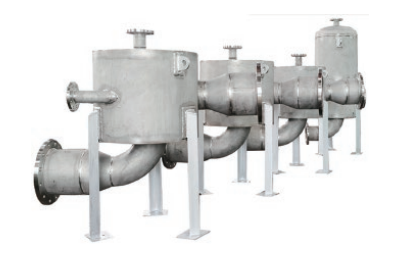
Temperature range: -100°C ~ 400°C
This can be used for heat exchange, preheating, heating, cooling, condensation, etc.
02 Detachable-spiral Plate Heat Exchanger
Two sides of the detachable structure, one or two channels can be disassembled cleaning, especially suitable for dealing with viscous or precipitated liquid, such as sewage treatment, kitchen slurry, chemical PVC slurry heat exchange conditions, can be regularly disassembled cleaning.
Temperature range: -100°C ~ 400°C
This is mainly used for vapor-liquid, liquid-liquid heat exchange.
Suitable for relatively dirty, easy to scale the medium.
03 Penetrating-Spiral Plate Heat Exchanger
Through-type structure, a flexible structure, easy to clean and maintain high efficiency energy-saving heat exchange equipment, through two detachable spiral channels to achieve fluid heat exchange, especially suitable for dealing with viscous or precipitated liquid, commonly used in tower top condensation, quenching oil cooling, fuming sulfuric acid cooling, fatty acid cooling, electrolyte heater and concentrated lye cooler.
Temperature range: -100°C ~ 400°C
This is mainly used for steam condensation.
This is suitable for medium with large quantity difference.
Advantage Features
Spiral plate heat exchanger is a kind of heat exchange equipment with compact structure, high efficiency and energy saving. It has the advantages of small occupied area, convenient installation, low price and high heat transfer efficiency.
High heat transfer efficiency:It is as high as 2900w/㎡ c, and its heat transfer effect is 30%-50% higher than that of the tubular heat exchanger.
Not easy to clog:Medium one goes through a single channel, which allows the flow rate to be higher than other types of heat exchangers, and the dirt is not easy to precipitate. There is a self-cleaning function in the channel, and the dirt is easily washed away.
Stable operation:It has two uniform channels, the medium can be uniformly heated and cooled, and the outlet temperature can be accurately controlled.
Recovery of low temperature performance:Two heat transfer media can carry out full countercurrent heat exchange. Suitable for small temperature difference heat transfer, recovery of low temperature performance.
Heat loss:Compact structure, small size. The outer surface area is small, close to the normal temperature fluid outer edge channel outflow (into), without insulation.
Structure: Both ends of the channel uniform welding seal, to ensure that the two heat exchange medium is not mixed.
Low price: Materials, board escrow, low cost. The use of coil, to ensure quality.
Bubbling Spiral Plate Heat Exchanger
Bubbling spiral plate heat exchanger combines the structural advantages of plate, plate-fin and traditional spiral plate heat exchangers, and abandons its shortcomings, which are embodied in:
Structural strength is good:Bubbling (honeycomb) spiral plate absorbs the cylindrical structure of ordinary spiral plate heat exchanger shell, which can withstand higher internal pressure. At the same time, it eliminates the problem that the spiral plate of ordinary spiral plate heat exchanger cannot withstand high pressure due to external pressure instability. A large number of dense bubbling units improve the stress state of the spiral plate and greatly improve the strength of the spiral plate.
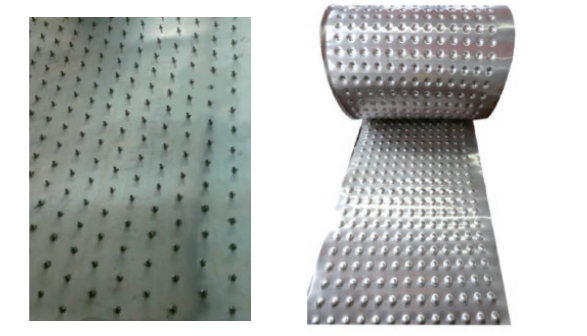
High heat transfer efficiency: Bubbling (honeycomb) spiral plate because of the steel plate stamping bubbling, the heat transfer area increases: for water-water heat exchange, the heat transfer coefficient can reach 3.5 kW per square meter per shotdegrees Fahrenheit, the two heat transfer media fully contact the heat exchange slot to change the flow state of the fluid, the medium flow direction and flow rate change, enhance the heat transfer effect while avoiding traditional spiral plates.The heat exchanger medium flows smoothly in the channel, and the thermal efficiency is increased by more than 30%.
Compact structure: Bubbling spiral plate heat exchanger absorbs the advantages of narrow flow channel of plate heat exchanger, and the width of flow channel can be reduced from more than 10mm to 3~4mm, overcoming the plate heat exchangers and plate-fin heat exchangers. Spiral plate is a continuous single channel structure, no dead angle, heat transfer effect will be better. Under the same heat transfer area volume is greatly reduced, the honeycomb unit is dense, the pressure bearing capacity is strong, the thickness of the spiral heat exchange plate can be reduced, and the volume can be reduced by more than 25%.
Avoid the disadvantages of distance column falling off: The fluid flows in this structure, there will be no fixed distance column blocking the fiber, corrosion resistance is more conducive to equipment cleaning. Non-pitch column (bubble) spiral plate self cleaning effect will be stronger.
The self cleaning role:Bubbling spiral plate is more complicated than that of the ordinary spiral plate. The fluid flows in this structure, and the disturbed flow state will be better, so as to improve the heat exchange effect. Simultaneously the possibility of precipitation of solid matter in the fluid is also smaller, so the bubble-type spiral plate self-cleaning effect will be stronger.
Sewage Type Spiral Plate Heat Exchanger
Ths Sewage type spiral plate heat exchanger is designed for highly corrosive circulating cooling water conditions such as chemical wastewater, rainwater, and domestic sewage, which effectively solves the problem of short service life caused by corrosion of traditional heat exchangers.
The sewage type spiral plate heat exchanger operates stably under extreme conditions, reduces downtime and maintenance time, extends the life cycle of the equipment, and greatly reduces the comprehensive use cost.
APPLICATION-SPECIFIC
Your markets are our markets. Every year, over a thousand products leave ZILONIS to be deployed worldwide, tackling the most demanding challenges.